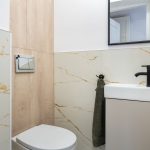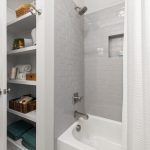

Picking tile for a cramped bathroom feels like a puzzle where every piece matters. One wrong choice can make the room feel like a closet, while the right combination can trick the eye into seeing twice the square footage. Walk into a well-planned compact bath and you probably won’t think about the tile at all — that’s the point. The surfaces work quietly in the background, bouncing light and stretching sightlines.
The tricky part is that advice for tile selection is often written with larger rooms in mind. What flatters a master suite can overwhelm a powder room. Scale, color, grout width, finish, and layout all behave differently once the footprint shrinks below sixty square feet. A glossy subway in a big bathroom reads classic; the same tile in a tight space might read sterile or, worse, chaotic if the grout contrast is wrong.
So rather than hand you a single “best” tile, this piece weighs the real trade-offs. Large versus small formats. Light versus dark palettes. Matte versus polished. Pattern versus solid. The goal is to help you see where each option shines and where it falls flat, so your final pick actually fits the room you have.
Large Format Versus Small Format Tile: Which Wins in Tight Spaces?
The instinct in a small bathroom is to grab small tiles — mosaics, penny rounds, mini hex. They feel proportional to the room. But proportionality isn’t the same as spaciousness. According to Angi, a busy pattern of grout lines can actually make a small bathroom feel more cramped because the eye reads all those seams as visual clutter rather than continuous surface.
Large format tiles — think 12×24, 24×24, or even slab panels — do the opposite. Fewer grout lines means fewer visual interruptions, which lets the eye travel further before it hits a break. The floor reads like one continuous plane. Walls feel taller. The cost trade-off is real, though: big tiles need a flatter substrate, more careful leveling, and often more waste from cuts around fixtures.
Small tiles still have a place. They’re excellent for shower pans (where you need slip resistance and drainage slope), accent niches, and curved surfaces where large formats simply can’t bend. The smart move is usually a hybrid: large format on the main floor and walls, small format reserved for functional zones where their weaknesses turn into strengths.
When Mosaics Earn Their Keep
Mosaic sheets work beautifully as a single focal strip — a shower niche back, a vanity backsplash, a thin horizontal band at eye level. Used that way, they add texture and personality without overwhelming the room. The mistake is covering an entire wall in mosaic, which turns the bathroom into a visual beehive.
How Does Color Choice Change the Feel of a Compact Bath?
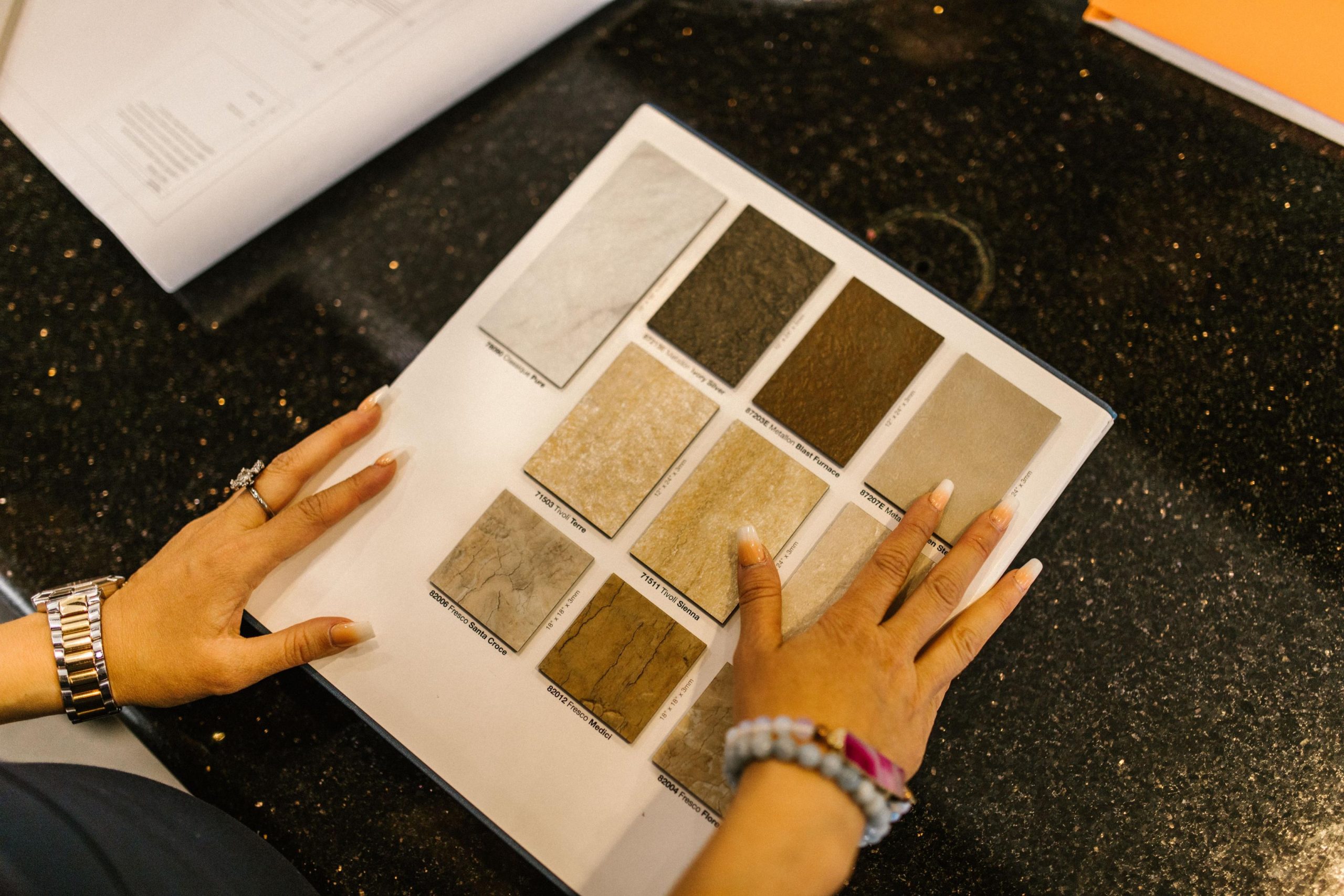
Light colors reflect light. Dark colors absorb it. That sounds obvious, but the application is where people stumble. A pure stark white can feel clinical and actually highlight every shadow in a windowless bath. Soft whites, warm off-whites, pale greiges, and dusty pastels tend to read more spacious because they bounce light without creating harsh contrast against fixtures.
Dark tile isn’t automatically off-limits. A deep charcoal or inky green floor paired with light walls can ground the room and make it feel intentional rather than cramped. The trick is committing to the contrast rather than muddling it. Half-measures — medium gray everywhere — tend to flatten the space and make it feel smaller than either extreme would.
Here are palette combinations that tend to work in tight baths:
- Warm white walls with a soft taupe floor for an airy, grounded feel
- Pale blush or pale blue tile paired with brushed brass fixtures
- Crisp white subway walls with a matte black hex floor for contrast
- Full tonal cream — walls, floor, and ceiling in the same warm neutral
- Soft sage green on walls with natural stone-look porcelain underfoot
Finish Matters More Than You Think
Glossy, matte, honed, polished, textured — the finish on your tile changes how the whole room reads under light. Polished and glossy surfaces reflect, which amplifies whatever natural or artificial light you have. In a windowless powder room, that bounce is often the difference between cozy and cave-like. The downside is that gloss shows water spots, fingerprints, and every streak from the last cleaning.
Matte finishes hide smudges and give a softer, more modern look. They also tend to feel warmer underfoot and less slippery when wet, which matters for floors. The compromise many homeowners land on is glossy walls to reflect light and matte floors for safety and maintenance. It’s a practical split that respects how each surface actually gets used.
Textured tile — fluted, ridged, hand-chipped stone — adds dimension but eats light. In a small space, use it sparingly, maybe on a single feature wall behind the vanity or inside the shower niche. An entire textured shower surround in a tiny bath can feel oppressive, no matter how beautiful the material is on its own.
Pattern and Layout Choices Worth Comparing in Any Bathroom Remodeling Project
Layout is one of the most underrated levers in tile selection. The same rectangular tile can read entirely differently depending on how it’s set. Vertical stacks draw the eye up and make ceilings feel higher. Horizontal runs stretch walls wider. Diagonal and herringbone layouts add movement, which can feel energetic or busy depending on the rest of the room.
Horizontal stacking has quietly become a favorite. According to the 2025 U.S. Houzz Bathroom Trends Study, roughly 18% of homeowners renovating are now choosing horizontally stacked shower wall tiles, a layout that reads clean and contemporary without the fussiness of a staggered offset. In a narrow shower, that horizontal line genuinely makes the space feel wider.
Pattern itself is having a moment. According to the NKBA 2026 Bath Trends Report, patterned and textured tiles are gaining ground with 66% of designers, signaling that homeowners are moving past the all-white minimalism of the last decade. In a small bath, a patterned floor contained by solid walls can feel like a jewel box rather than a cluttered room — the key word being contained. One patterned surface, not three.
Common layout options worth comparing:
- Running bond (classic offset) — safe, traditional, forgiving of imperfect walls
- Stacked vertical — lengthens the room upward, modern feel
- Stacked horizontal — widens the room, reads current
- Herringbone — adds movement and interest, best on floors or single accent walls
- Basketweave — works well for vintage-leaning designs, usually in small format
Budget and Resale Considerations for Bathroom Renovations
Tile is one of the few finishes in a small bathroom that you see from every angle, which makes it tempting to splurge. But small square footage cuts both ways: expensive material feels achievable because you need so little of it, yet labor costs forintricate layouts, specialty cuts, and premium materials don’t shrink proportionally. Setting a hand-painted cement tile floor in a five-by-seven bath can still run four figures in labor alone, even if the tile itself only cost a few hundred dollars.
The sweet spot for most compact baths is spending where it shows and saving where it doesn’t. A striking floor tile earns its keep because you see it the moment you walk in. The inside of a shower, by contrast, can lean on a budget-friendly large format porcelain and still look sharp. Nobody is studying the back wall of your shower surround the way they study the floor pattern that greets them at the door.
Resale is the other half of this math. Highly personal choices — bold geometric patterns, saturated colors, distinctive handmade finishes — reflect your taste but can narrow the pool of future buyers. Neutral large format porcelain with a single personality moment (a patterned floor, a colored niche, a textured accent) tends to photograph well and appeal broadly. If you’re planning to stay a decade or more, personal taste wins. If you expect to sell within a few years, restraint pays.
Where to Spend and Where to Pull Back
A few practical splits that tend to work in tight baths:
- Splurge on the floor tile, save on the shower walls
- Splurge on a small accent (niche, band, or backsplash), save on the surrounding field
- Choose mid-range porcelain over natural stone — the look is close, the maintenance is easier
- Keep grout choices simple; exotic epoxy colors add cost without adding much visual payoff in a small room
- Reserve the budget for professional installation rather than premium material if you can only afford one
Practical Mistakes to Avoid Before You Order Samples
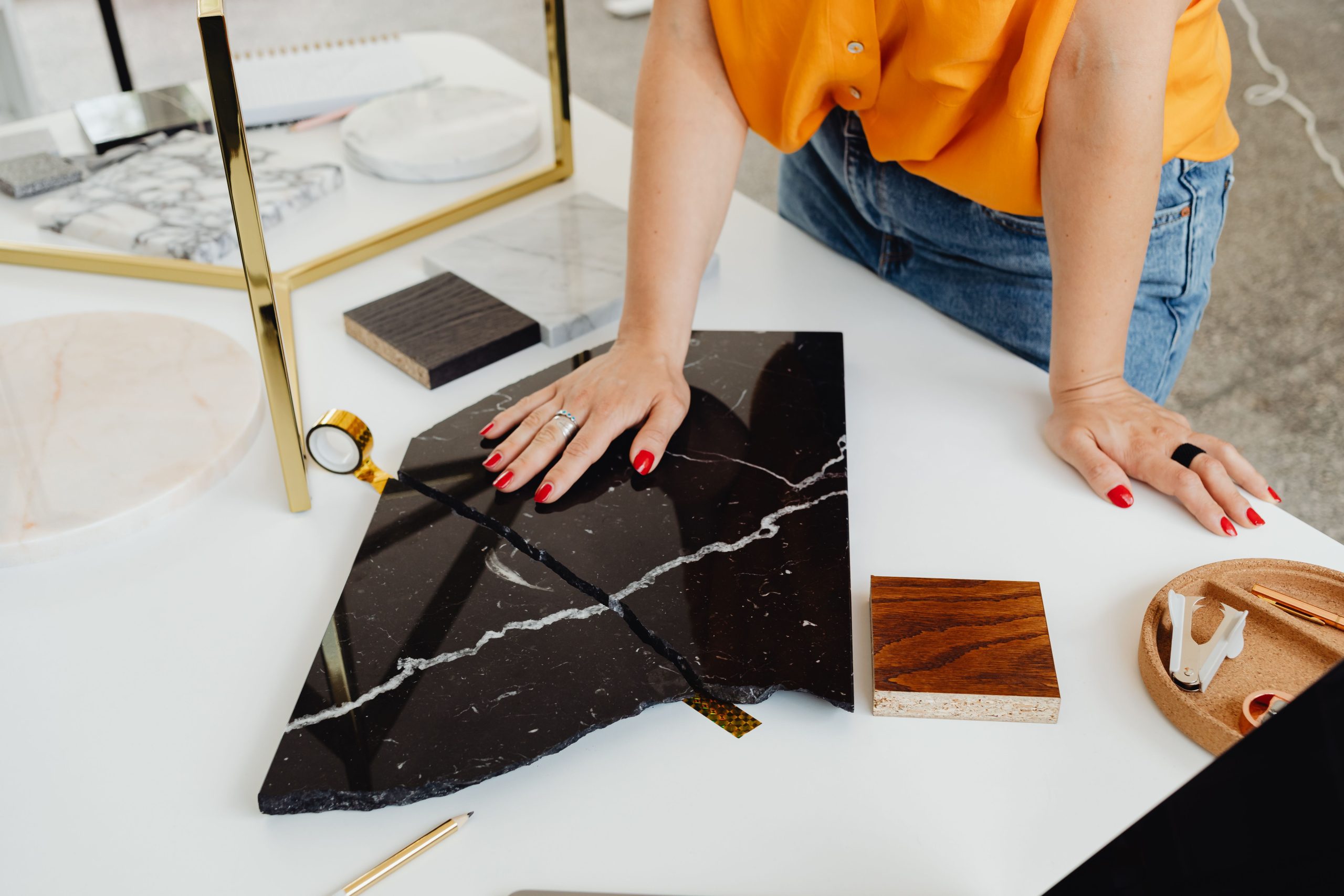
Ordering tile is where good intentions go sideways. The showroom lighting flatters everything. The two-inch sample chip tells you almost nothing about how a full wall will read. And the delivery truck doesn’t care that you underestimated waste by ten percent. A few habits save real money and regret.
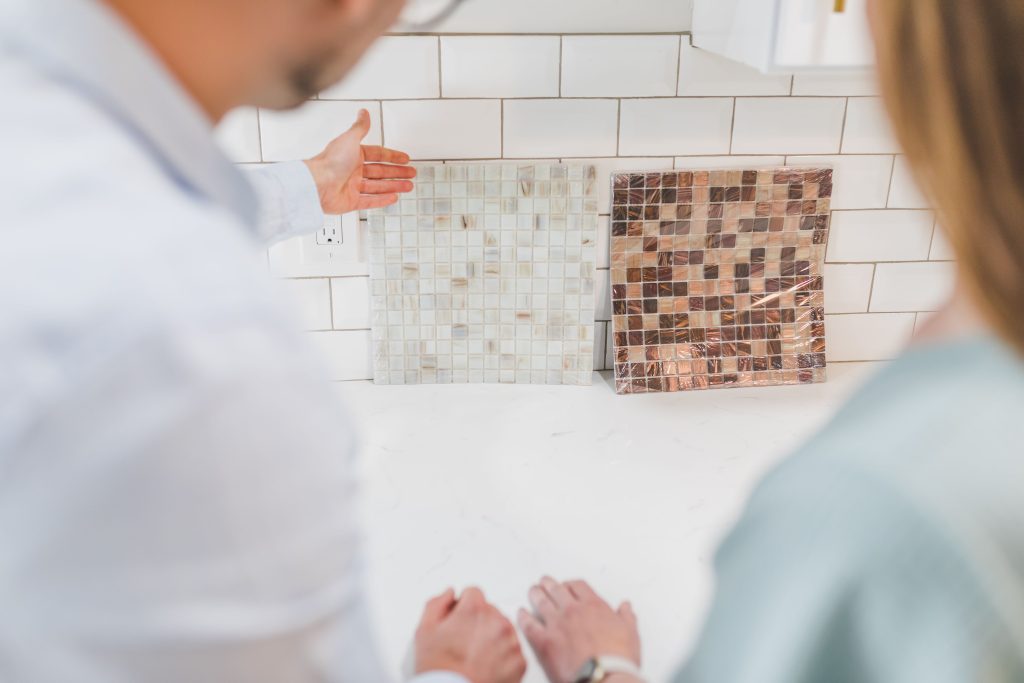
Always order samples and live with them in the actual bathroom for at least a few days. Tape them to the wall, look at them in morning light, evening light, and under the vanity fixture you plan to install. Colors shift dramatically between a bright showroom and a windowless interior bath. What looked like a soft warm beige can turn pink or yellow once it’s in your space.
Grout deserves as much thought as the tile. A matching grout makes the surface read as one continuous plane, which almost always helps in a small room. A contrasting grout emphasizes the pattern, which can be charming on a classic subway but overwhelming on a busy floor. If you’re torn, go one shade darker than the tile for floors (it hides dirt) and matched for walls. Among the most useful small bathroom remodel ideas is treating grout as a design decision rather than an afterthought — it shapes how every tile around it reads.
Order more than you think you need. Standard waste is ten percent, but intricate patterns, diagonal layouts, and rooms with lots of cuts around fixtures can push that to fifteen or even twenty percent. Running short mid-project means hunting for matching dye lots, and matching lots rarely match perfectly. A homeowner tackling their own Bathroom Remodeling project will find that one extra box on the front end is cheaper and less stressful than a frantic reorder halfway through installation.
Finally, think about the transitions. Where does your tile meet the hallway floor? Where does the shower floor meet the main bath floor? Where does tile stop climbing the wall and paint take over? These edges are what separate a polished installation from an amateur one, and in a small room every edge is visible from the doorway.
Conclusion
Tile in a tiny bathroom is one of those decisions where the stakes feel bigger than the surface area suggests. Every choice — format, color, finish, layout, grout — compounds with the others, and the room is small enough that a single misstep is impossible to hide. But that same smallness is also forgiving in its own way. You need less material, so premium picks become reachable. You see the results immediately, so you know fast whether a sample is working.
The strategies that consistently pay off are the ones that respect how the eye actually moves through a compact space: fewer visual breaks, thoughtful reflection, committed contrast rather than muddled middle ground, and restraint on pattern so one surface can shine. Pair those principles with honest budgeting — knowing where to spend and where porcelain does the same job as stone — and the room starts designing itself.
Take your time with samples, trust what you see in your own light rather than the showroom’s, and remember that a small bath done well can outperform a large one done carelessly. The square footage is tight, but the opportunity to make something genuinely beautiful is not.